Tijori

Private money tracker
iOS app · offline finance
An offline iPhone app for spending, budgets, cards, loans, investments and net worth. Nothing leaves the phone.
The problem
Most finance trackers want an account, a bank link or a server, so your spending history lives with someone else. Tijori is for people who log money by hand and want it to stay on their phone. It’s India-first — rupees, lakh and crore, UPI, cards and EMIs, financial-year recaps — with eight other countries supported.
What I built
Expense, income and transfer entry with an amount-first keypad; monthly budgets with alerts and a safe-to-spend-per-day figure; credit cards with billing cycles and due dates; loans with generated EMI schedules; and net worth rolled up from accounts, investments and assets.
The database is SQLite through GRDB, built against SQLCipher, with a 256-bit key in the Keychain. Backups are AES-256-GCM, keyed from the user’s PIN through Argon2id.
iOS can’t run code when a local notification fires, so recap teasers are recalculated and rescheduled whenever the data changes, and a priority allocator keeps dues, renewals and recaps inside iOS’s 64-notification limit. Widgets never open the database: they read a totals-only snapshot the app writes to a shared container.
What came out of it
In TestFlight with internal testers. No account, no server, no analytics — the Release build contains no networking code.
Screens
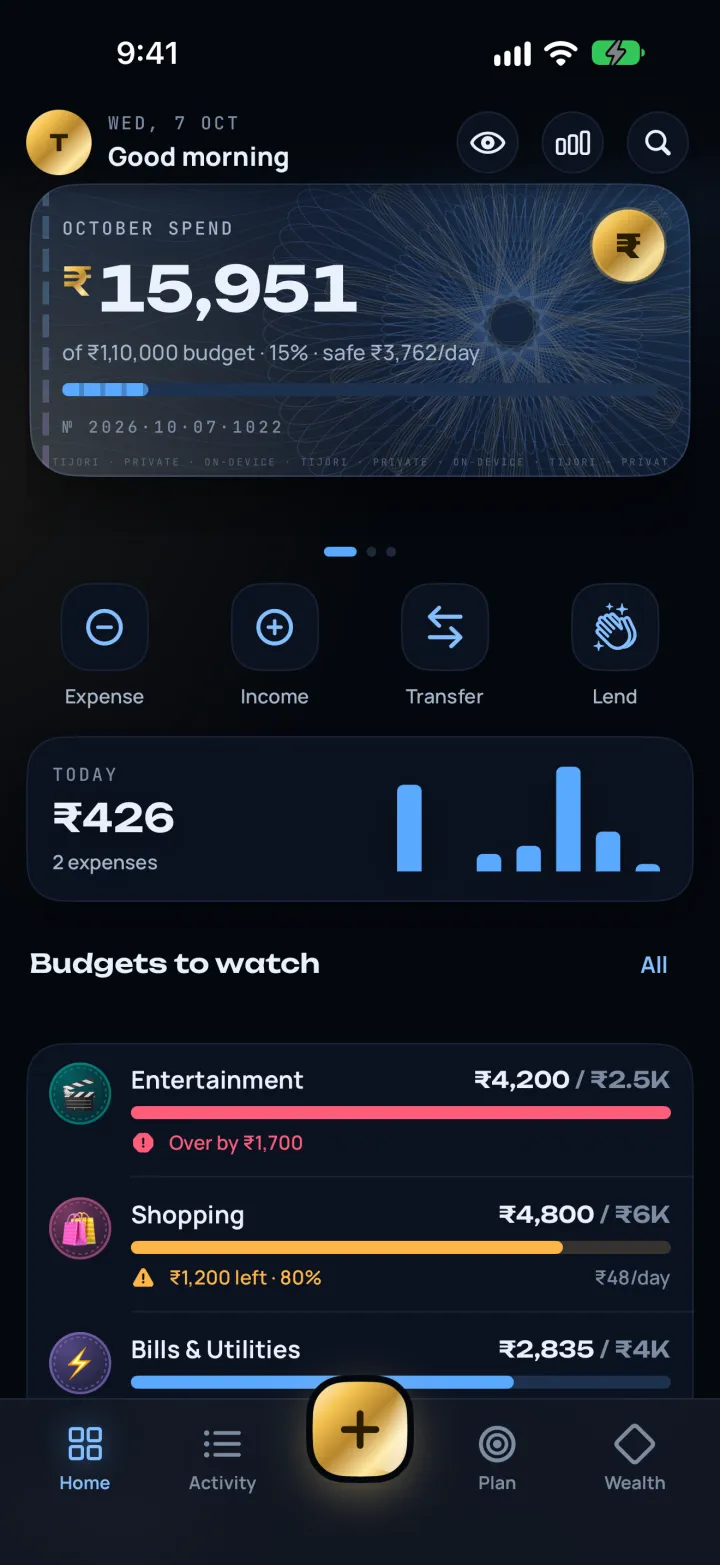
Home: October spend against the monthly budget, buttons for expense, income, transfer and lend, today’s spend chart and budgets near their limits 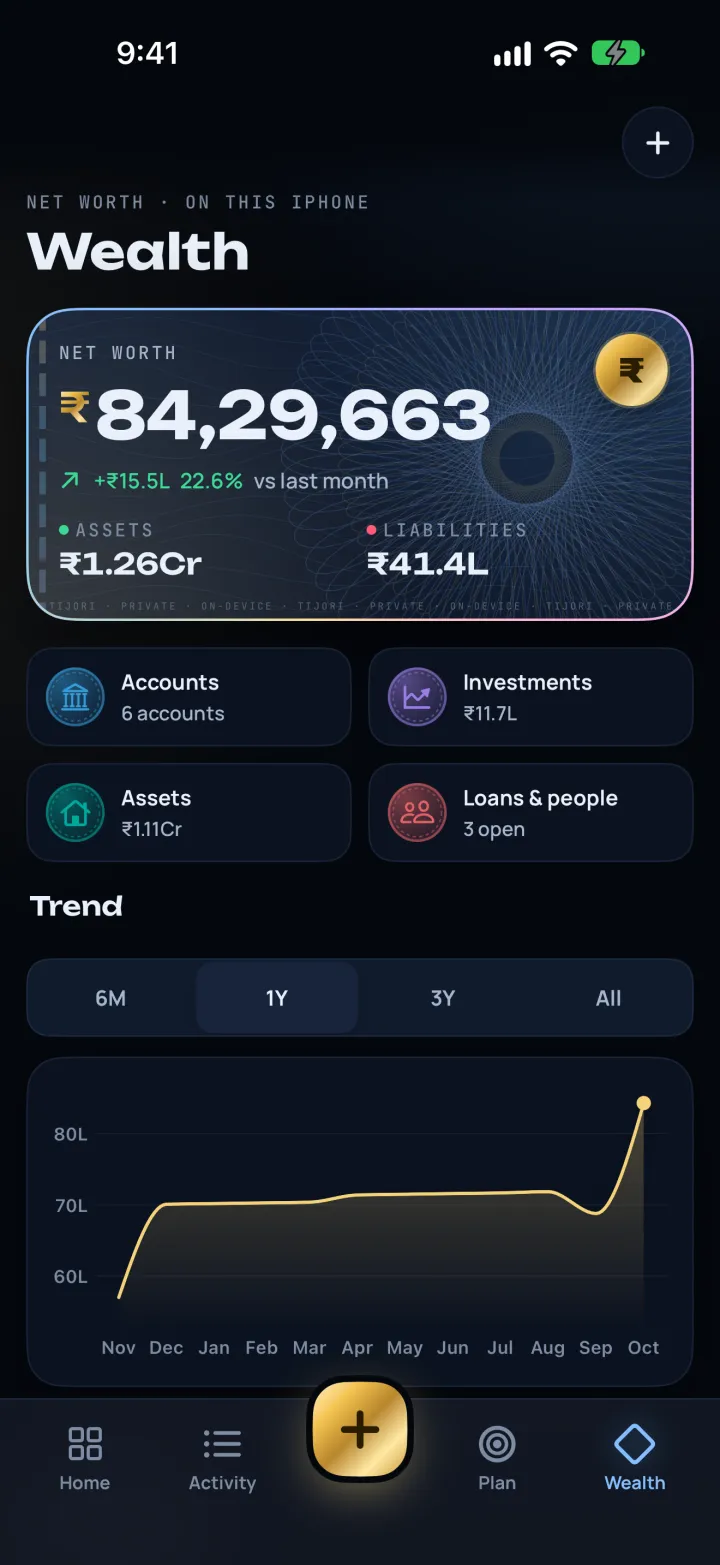
Wealth: net worth with assets and liabilities, links to accounts, investments, assets and loans, and a one-year trend chart 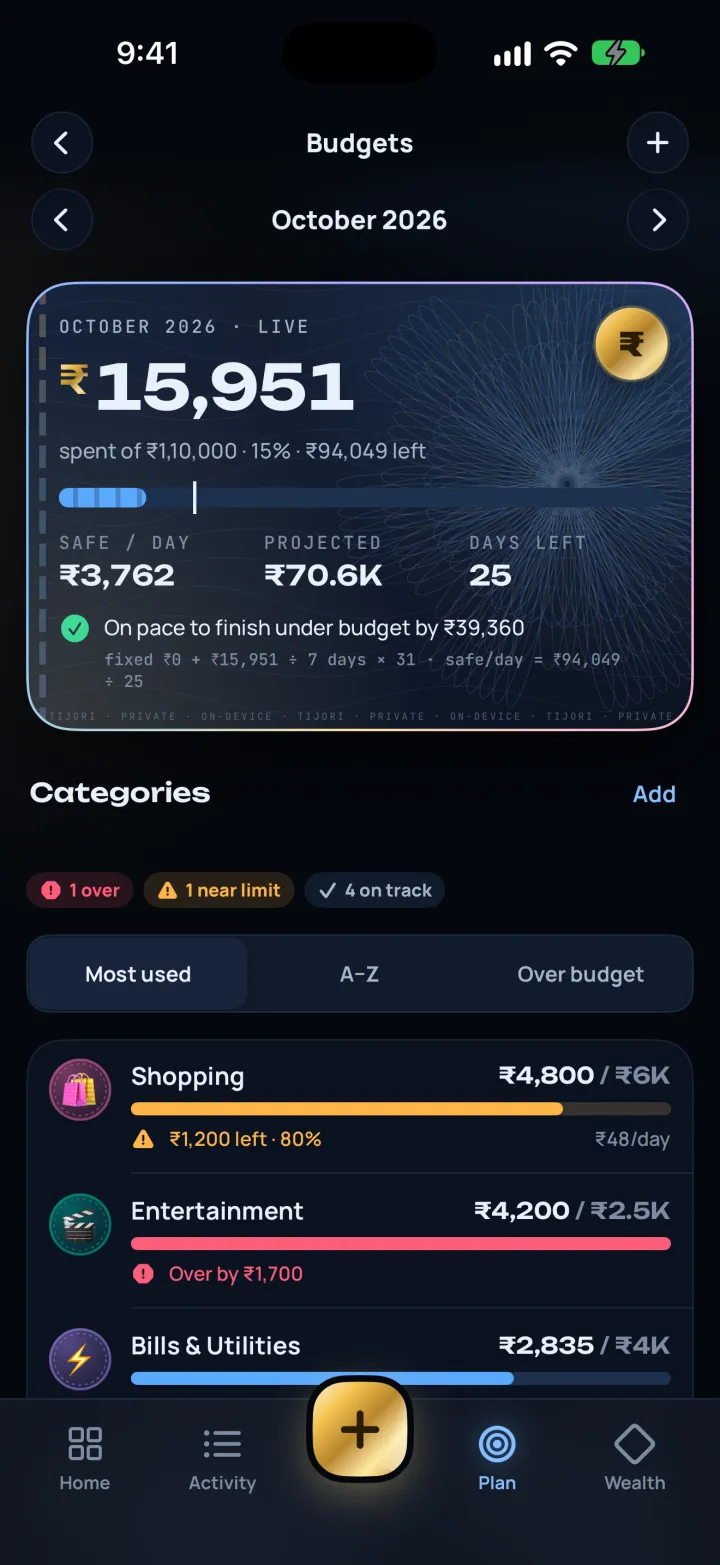
Budgets: the October budget with safe-to-spend per day and projected month-end spend, and category budgets marked over, near limit or on track 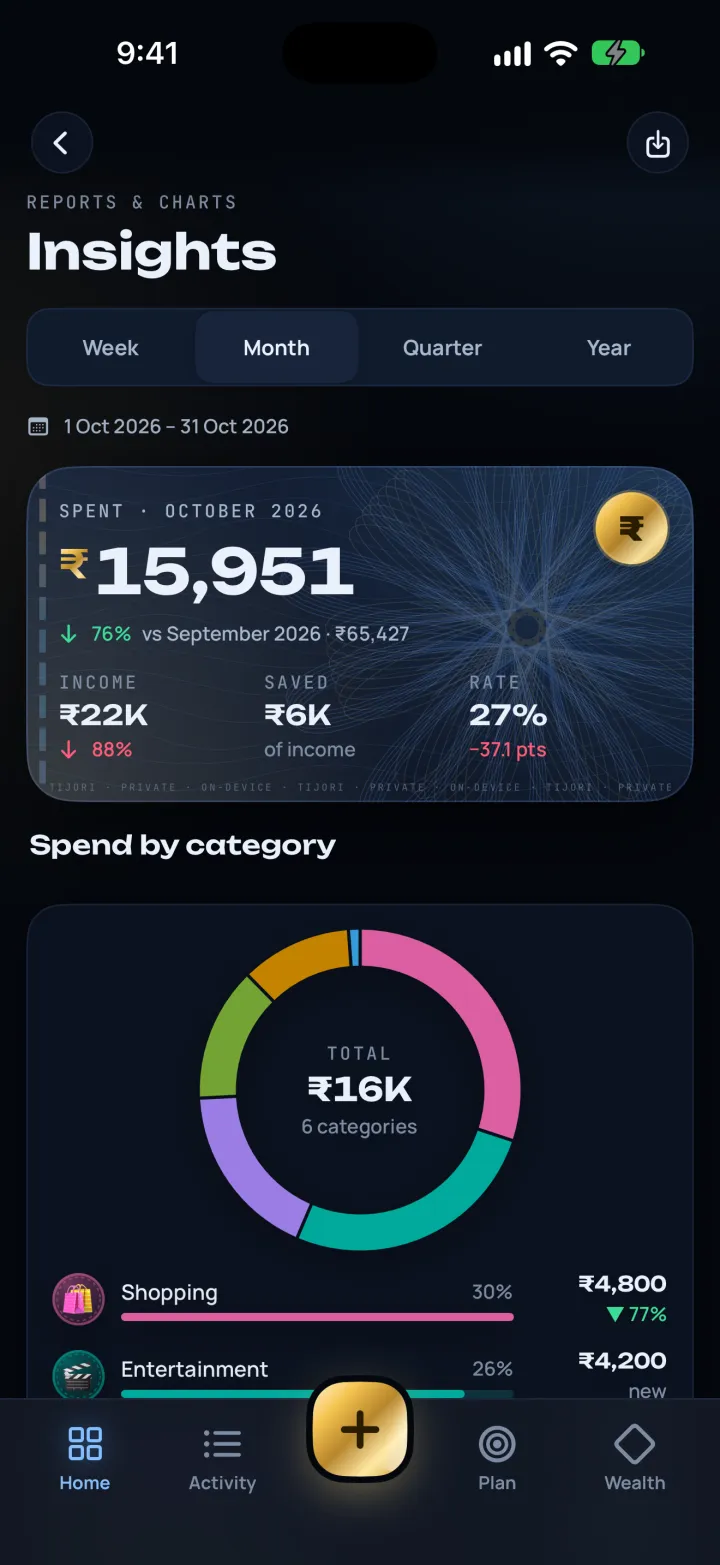
Insights: the month’s spend, income and savings rate against the previous month, and a spend-by-category donut chart 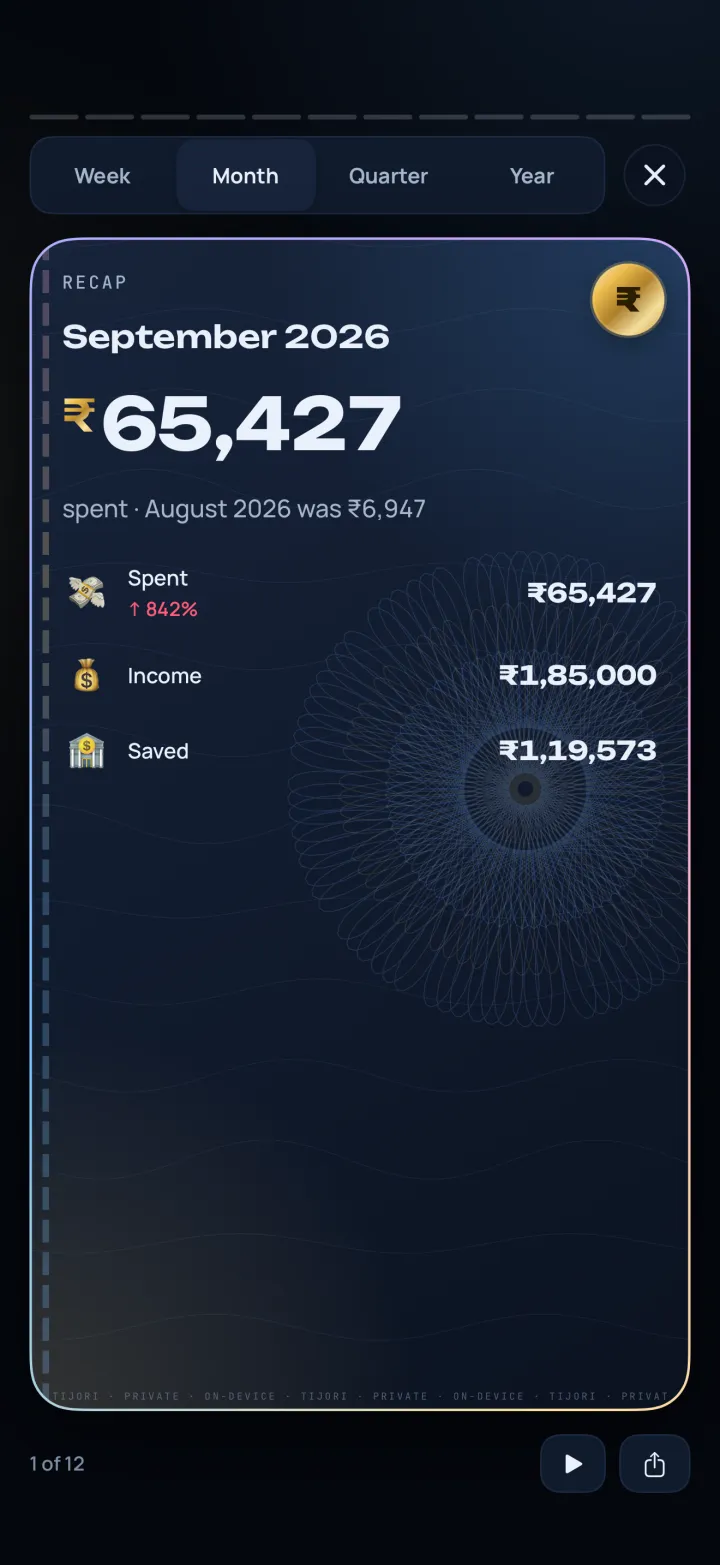
Recap: the first card of the September 2026 monthly recap, with spent, income and saved
Something like this? Send a brief